Monday, December 5, 2016

Star Trek Double Feature

Trying to write about the two most recent Star Trek movies, it became clear that I really can't talk about one without the other. Fortunately enough time has passed to consider Star Trek: Beyond and what it meant.


Movie posters are great and usually express some of the same themes as the whole movie.

Sunday, December 4, 2016

Not all patriarchal archetypes...

Bit of a follow up to both the Whedon and Alien discussions.

Joss Whedon is certainly not the only artist to hit on the "enemies in law, enemies in chaos, we're stuck in the middle" theme. Hell, even all give five Alien movies use this. Oh look, the weakest of those, Alien Resurrection, is a Joss Whedon movie.

But it's not a universal theme you see in every work, only one that you see in every Whedon work, and one that plays well with his constant delivery of anti-dramatic sarcasm.

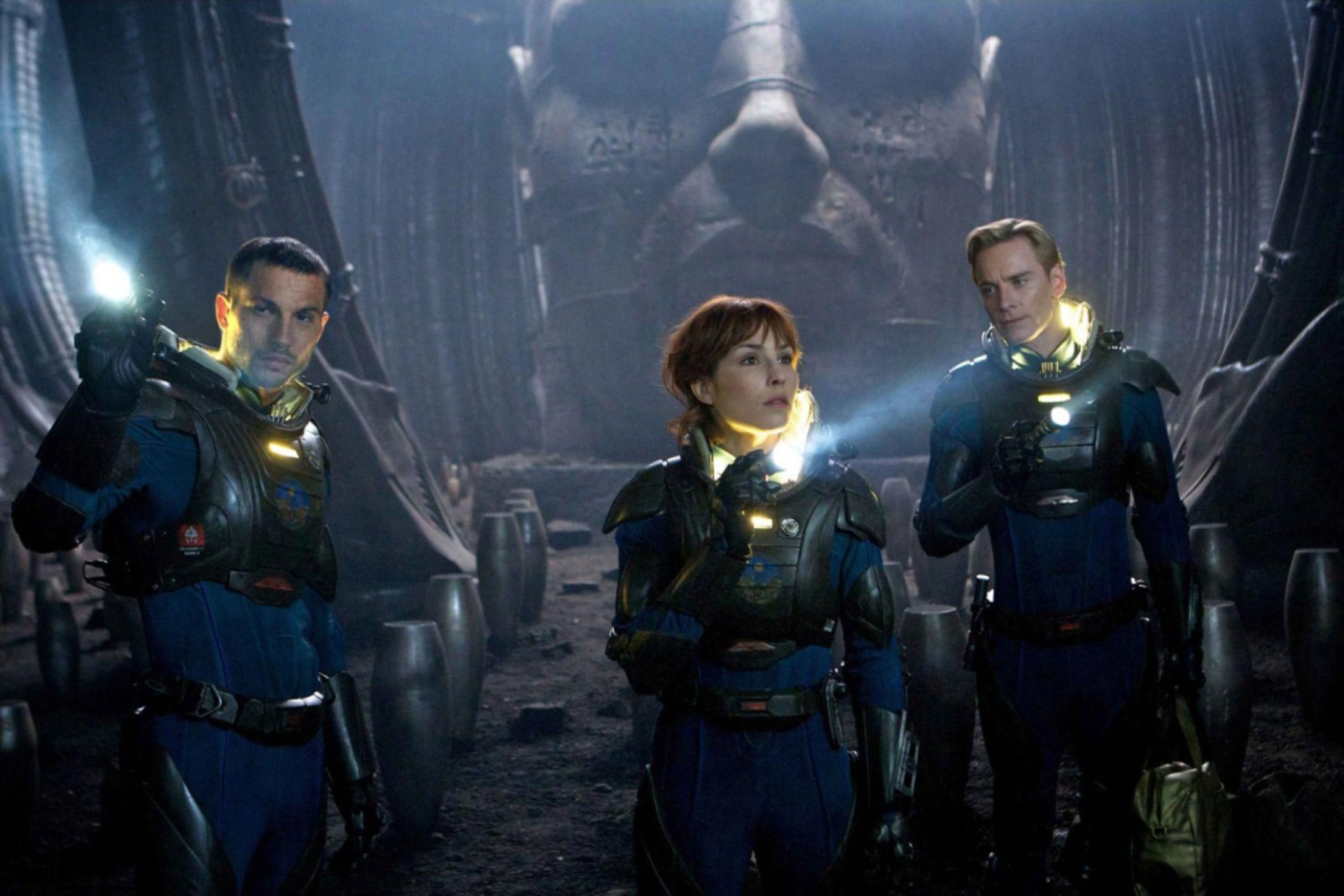
Another significant difference is the attitude of the lawful-enemies. In the Alien franchise for instance, they are inhuman entities whose key trait is they do not give a fuck about you. In the first movie the key phrase is "Crew Expendable" typed out by a remorseless AI. In Prometheus, order is somewhat represented by a grasping Weyland who doesn't care if an alien was just cut out of your body, only if you're standing between him and immortality - but more it's represented by the Engineer race, this angry male god who sees you as little more than an accidental blot on a clean galaxy. Generally all of these forces are willing to ignore you when you don't matter, and expect you to die for them when they desire something.

Whedon's order is a much more human patriarchy. It cares about you, it wants you to submit, and it wants you to be grateful for their beneficence. It wants to change you, into something more useful and obedient (hence why Whedon's Alien movie is the one about biologically manipulating and controlling Ripley.)

Saturday, December 3, 2016

MCU Color Grading

Cute little Youtube video on a particular aspect of cinematography: color grading. He even ties the artistic decisions made here, to those made in the inking process for comic books.


The only problem is the twelve hundred times he says "this is just my opinion." Including the self-deprecating insert at the end about just being a nerd with over complicated opinions.

Dude, it's okay, you can have a perspective without apologizing for it.

Friday, December 2, 2016

Prometheus and Truth

One of the best movies of the decade so far has been Prometheus, the prequel to Alien. As such it occupies this nuanced middle ground between:

  • Alien - being a story of company grunts who come upon a horrific discovery and are left to die for the sake of inhuman ambition. 
  • The Prequel Trilogy - being a hyper-real spectacle that mocks our attempt to make sense of a horrific universe.


But anyone I recommend this movie to always has one complaint before any engagement with the film:

SMG Addendum to Whedon Post

Replying to the question of "Is Joss Whedon a feminist?", SMG had a wonderful analysis that veers away from personal critique, and emphasizes the ideological straightjacket Whedon is stuck in, which works as a fitting conclusion to yesterday's post that asked "why is everything unruly zombies or cynical patriarchs with him?"

To start things off, there are two temptations to be avoided: 

Thursday, December 1, 2016

Cabin in the Woods and "Death of the Author"

Much criticism of literary criticism (like this blog attempts to be) dismisses it as "death of the author." They see any textual criticism as the same as the idea that discussing the author of a work is utterly irrelevant to what the art says. You would think the numerous posts quoting Lucas, or yesterday's post wondering about the author of Unsong, would give the lie to that, but apparently not. TheGreyTribe has an amusing summary of such complaints. I also recommend people who want to use that term read Roland Barthes himself and see what he meant when he coined it.

The type of analysis this blog subscribes to is much more in line with "auteur theory," where the author is one contextual element of a work but not the only one. In addition to the author informing us about the work, the text itself informs us about the author.

(Below, spoilers that assume you've seen Firefly and Cabin in the Woods, or that you don't worry about spoilers.)

The Time Has Come

Thanksgiving has come and gone, the radio stations are playing holiday music, decorations are up, and the Love, Actually think pieces have begun.
Love, Actually is neither good nor romantic. Out of the 10 or so relationships depicted in a movie that markets itself as "the ultimate romantic comedy," none of them actually involve love, and most of them aren't the slightest bit romantic. 
Ow.

So as a reminder and a defense against bad hot takes*, I am linking you to my Love, Actually explanation from a few months ago.

(*There is nothing inherently bad against think pieces or hot takes. Being against all such articles would be like being against consideration and interpretation itself. But an analysis can be bad, and the solution to that is actually good analysis that tries to rescue valuable meaning from everything in our lives.)