Thursday, June 17, 2021

Black and White and Red All Over


When the trailer first came out, my reaction was "this isn't a successor to Maleficent, this is a successor to Joker." I only had no idea how right I was. This was a great movie to be the first film I've seen in a theater since early 2020.

The movie is a heavily filmic homage to the late 70's and early 80's fashion/art scene in London and New York. It particularly loves the "Anarchy in the UK" vibe of that time. It excuses these aesthetic indulgences with the story of mad genius who becomes a superhero/supervillain alter ego with the power and morals of fashion. To this con-artist, style is substance.

And like Joker, the director realizes "wait I can get hundreds of millions of dollars from a studio to make this homage to 70's film... if I just say 'by the way the main character shares a name with some other IP', with no actual obligation to fit any pre-existing canon or imagery? Radical."

So watch it without thinking of Disney canon, and just drink in the visuals, the camerawork, and the conflict between our human self and our inhuman ideals.

Ideally, you'd watch this movie turning off the dialogue. The soundtrack is fantastic (again, homage to the 80's punk scene). And the visuals and camerawork are luxurious. The actual dialogue is a lot of bad accents, bad plot exposition (oh god the voiceover), plotholes the size Cruella could drive a Rolls Royce through, and middling witticisms. You can pick up "what is happening, how people feel, what are their motivations" entirely through the visuals. (The most you miss is a punchy running joke about saying "thank you".) I realize this won't be an option for most people, but in twenty years when this is a cult hit being watched on HD-mini-USB-chips or whatever, I think they'll go for the dialogue-less option.

Anyway, assuming you have seen it, or don't care about spoilers, let's talk about what we actually saw:

***

The first thing that jumps out at you about this fashion-obsessed movie is color. Unsurprisingly, they do a lot with the black and white motif. More surprisingly, they are consistent about the meanings of those colors.

One of the complaints people seeking to understand the foundations of racism make, is how we attribute black as the negative color, and white as the positive color. Cruella - with her half black, half shock white hair - subverts that. Like her hair, she has one white ethnic friend/goon and one person of colour friend/goon, who each offer different advice.

In the movie black (as in black hair) is the color of: conscience, conformity, the middle-class, a desire to fit in and take the straight and narrow. It's how you would think the hair of a small child or twenty something would actually looking. (And it's the life path her South-Asian friend pushes her to. And every person of colour in the movie - including the new Roger and Anita - are part of a middle-class "goodness.")

Whereas white is the color of: age, aristocracy, the will to power, crime and violence. It's how the villain/mentor primarily appears. It's how her white hair stands out. (And it's the life path her Irish friend pushes her to.)

[Recall the bit in 101 where the Dalmatians try to get away by rolling in so much coal dust that they look like black dogs with white spots.]

The third color we see is of course, red. Red appears in many ways (an inappropriate red dress at the B&W ball) but most strikingly it appears as a cut that bleeds. Red is the color of messy humanity, that doesn't fit in the conformity vs ambition balance of the rest of the world.

If someone set it out to create a movie where "the color white represents evil" this is what they would have arrived at (well, after the Hunger Games.) Which is of course why vicious Dalmatians kill her mum.

Here's the thing about the Dalmatians. Cruella doesn't want revenge on them, which is most commentator's interpretation of the scene where they know her off a cliff. We see later from the glint in her eye that Cruella fears those dogs. And Cruella's first coping mechanism is to go towards the things she fears. She always runs headlong at the thing she is afraid of, because she has no room to run away. In this movie she moves towards the dogs to sit down near them, and in the future she will make a coat out of them. Because she can't afford to give fear an inch.

She learned this from the villain, the Baroness.

Of course, the movie tries to build up the Baroness as some great figure of evil, despite a boring name and no franchise history we know of, which is doomed to be disappointing. But what is interesting is how much of this character is just straight up Cruella, which the protagonist embraces whole-heartedly. In most superhero origin stories, we get some scene of the supervillain saying "you're just like me!!!" and the hero saying "neverrrrrr!" But instead for this costumed superstar, she consciously embraces the lessons of the fashion world prima donna.

Baroness: If I had cared about anyone or thing, I might have died like so many brilliant women with a drawer full of unseen genius and a heart full of sad bitterness.

It's a rallying cry for second wave feminism, and a rationale for why it's okay to skin puppies.

***

I suppose for the people who haven't seen it - or who have but resist reading - I need to explain why this is a superhero origin story. It's because it starts with a "normal" human who wants to fix a wrong in the world and to do that creates an alter-ego who performs superhuman feats and poses as a symbol of their ideals.

In this case, not only does the protagonist take on the mask of "Cruella", but she literally has a funeral for her old, human self (Estella.) She makes clever costumes. She even fights seven goons in a show-off-y manner. And more plot and shenanigans revolve around keeping these two identities separate and secret than in eighteen MCU movies about superheroes.

If anything, Cruella is more like Superman than Batman or Iron Man - Cruella (with the bicolor hair) is who she really is, and Estella is a wig she wears on top of that. (One of the awkward bits of dialogue is that "Estella didn't get anything done, Cruella does," when as far as we can tell, Estella was a heartless and successful thief.

What's her superpower? Well when Estella gets pushed off a cliff to fake her death... she survives with a literal parachute skirt. Improbable, maybe, but it's wholly in keeping with her nature.

Not a few critics have complained that this prequel pulls its punches by not having Cruella kill a single dog - or single person, or even do anything really bad besides steal from the underserving and emotionally ignore her henchmen (who she learns to make up with.) And it is true that it's weak to revel in how EVIL your style is, while shying from anything that might get you an R rating. But they do the next best thing: Cruella frequently mentions the possibility of killing someone or a dog, and when the normie is shocked shocked at doing such a thing, she laughs it off as "obviously a joke." This is what some call the "Nelly defense," and often stands for "this person is totally willing to do such a thing but society so far won't let them."

This is not a story like Maleficent. This is not even a story like Spider-man. It would however fit in the DCEU.

***

Tragically, I can't analyze the fashion like this movie deserves. Other bloggers will have to take up the mantle. The outfits do take center stage, is all I can say. Obviously this blog is going to love the asymmetry and use of garbage in her designs.

There's also a lot more to say about dogs in this movie. Cruella has a complex relationship with the famous Dalmatians (including using them in her coup d'grace, bringing them to heel with a command, and gifting them to Roger and Anita.) And once again with the duality, she has a dog she was raised with that she loves, and another (one-eyed) dog that came as part of her grifter life, coming to represent the emotional and manipulative parts of her soul, respectively. So she doesn't kill any dogs, but they are still involved in her narrative arc.

It would be impossible for class not to feature prominently in any movie about getting revenge on an aristocrat in Britain. However, despite this surface rebellion against the established order, the class reading doesn't go much deeper. Obviously rather than overthrow the hierarchy, Cruella just wants to install herself at the top of it

Sunday, April 18, 2021

The Nevers

I never intended to talk about the Nevers, because it's on HBOMax which even most twitterati aren't going to bother to pay for, and because Joss Whedon's work like this seems very repetitive, and of course his star has gone down in flames. It seemed unlikely his last series would get much discussion or acclaim, nor deserve it anyway.

And all of that would stay true if we only talked about the first half of the pilot episode. If you really, really wanted Buffy writing but in steampunk London updated for 2020 sensibilities, you got exactly that.

I am going to take the rare step of declaring SPOILERS. If you think you are possibly going to watch this pilot (again, on HBOMax, which lets be honest we only subscribed to for the Snyder cut) then do so before reading this.


The first half is, you know, fine. It's a show in an oppressive patriarchal society with women running around kicking superpowered kung fu butt. It adds to Buffy a much more distinct awareness of *class* (because we are talking about the times with the tropes of Victorian aristocrats and industrialization and slums), and the show is using disability as a its central metaphor. All of the superpowered marginalized outsiders are "Touched" in a term that has both negative connotations alongside pretty awesome results, and much of the dialogue is like a tumblr talking about being disabled. Not wrong really, but very much what you'd expect.

The period setting production values are expensive. The actors are good actors and *very pretty*, despite jokes about "the ugly one" no one in a Whedon universe is ever not gorgeous. It is kinda regrettable that their central actress, Laura Donnelly, looks and sounds so much like Eva Green when the show this will be most compared to is Penny Dreadful. The problems this Orphanage for Gifted Youth face are detailed in the pilot: high nobility who consider any disruption to the status quo a threat, fey pimps who want to coerce the Touched and sell them in a sexual manner, rebel Touched who are murdering people in back alleys alluding to Jack the Ripper and are led by someone named Maladie, and mysterious mechanical-like men who are just outright kidnapping vulnerable Touched. The Orphanage itself is an idyllic Garden of Eden where all the Touched use their delightful superpowers to make a harmonious utopia and get along without drama - all threat comes from the outside. (Very reminiscent of the classic tumblr argument about the differences between Storm and Rogue.)

It's fine, a return to pre-Avengers form for Whedon, and due utterly to be forgotten especially as its creator's star fell. (For the record, directorial tyranny on set of the like Whedon has been widely accused should disbar someone from having that sort of power again. Though it seems likely this abuse is widespread in Hollywood and Whedon should not be its sole scapegoat. We need structural solutions.) It's smoothly entertaining but entirely predictable. One should always keep in mind Supermechagodzilla's critique of Whedon's entire political project, which applies here as much as ever.

Then the second half begins, with Maladie slitting the throat of a man costumed as Satan in the middle of the opera, giving a tour de force monologue rant.


I killed the devil. Is no one going to say “thank you”? It’s okay. It’s okay. It’s okay, petal. It’s not your fault. It’s the doctor. Oh! Oh, there’s so many people. Did you all come in hats? Now all of your brains are naked. No? You shall have a wreath of eels with the tail in your mouth.

Devil’s specialty is eels. Which is known by you as a serpent. Oh, but it’s only Adam. It’s all the same when it slithers. (whispers) Eve had a cunt.

Why am I here? I came to kill an angel witch. Oops. But the closer I came, the more I felt I was here for a r… 

Because I… saw God. He was all light. And He put on me His wreath. He came. He came to us all, and you all turned your backs on Him. You lied. You said He never.

But He makes hum. Oh, He sings. (gasps strained note)  I could never make it out, but I feel His hum, like a comb in my throat.

And I feel it. I feel it. Him. Here. Who… Who…

Ah, bugger it. Take the angel.

The performance is somewhere between Summer Glau at her craziest in Firefly and Eliza Dushka in her most murderous roles, so still not super original. But the scene takes her insanity much more seriously than any Harleyquinn wannabe in Whedon's toolkit has before. This is someone who saw God and was driven mad by the experience. Mad enough that she is forever trying to kill the devil, like an abandoned Archangel.

There's a chase and a fight scene, some sublime singing by a plot-important Touched, and some confrontations full of weighty reveals (the fey pimp is commanding the salt of the earth detective, both once again very entertainingly acted.) An Evil Doctor talks about dissecting the Touched to find "where God touched then" and the two main characters have a heart to heart about the mission to rescue the girls.

Then we cut back to what we were seeing at the start of the show, three years ago when all these marginalized innocents got their powers. And we see...

A steampunk spaceship of glowing white light descend out of the clouds, dissolving over London, as every character looks up in awe. The snowflakes of the dying ship drift down and Touch the characters we know to be of that affliction. And the way every character uniquely interacts with the snowflakes tell us how those characters relate to God. Some reach for God, others are restrained while God falls onto them, others are literally dying and rescued by God, some collapse to the ground with His presence.

It is the best scene Whedon has been involved with since second season Buffy, just these last 5 minutes of the show. We see the glory of God that has driven Maladie insane. And we see everyone (but her) just forget the ship as soon as the dissolution is complete.

It's an exploration of transcendent luminance I did not expect from the first half of the show.

Now, I am very doubtful that as the lore of the show develops, this spaceship will really be the divine presence. It's almost certainly going to have a wikipedia like explanation as some cross between Worm backstory and Asgard from the MCU. Advanced aliens who think Earth needs to stop oppressing marginalized communities to be welcomed into galactic society, etc. This spaceship and its species will inevitably be normalized and made banal by all the "mythology" that will end up being behind it.

But those explanations are in the future. For this particular episode, the imagery was of a vessel of God, anointing angels. And that was much more than I expected today. (Though not enough for me to pay for the rest of the series.)

Saturday, March 20, 2021

Bug People

 A full review of the Snyder Cut is going to wait a few days, but before I disappear I just wanted to add a voice to the chorus against what is consistently the worst offense of both the MCU and the DCEU: bug people.


Problem: We want to show our heroes kicking ass. But we don't want our heroes callously killing hundreds of human beings. They're smart enough and liberal enough to know you don't solve problems on Earth by slaughtering other people. And aliens that look like and act like people, that also leads to too many ethical questions.

Solution: We make alien hordes that are just human enough to fight, but not an inch of empathy more than that. 

Result: The six pictures above came from six different movies (Avengers 1, 2, IW, Endgame, Suicide Squad, Justice League) and yet are depressingly similar. I estimate 10 hours of my past year has been watching superheroes fight these same, boring Bug People.

They don't make for good fight scenes, and half the time you can't even see what they are doing.

They don't make for good ethics, because "there exists a faceless horde you can slaughter to solve your problems" is still the fantasy that needs to be destroyed. The only thing in our world is other people who need to be interacted with as people. That doesn't mean violence will never be an answer, but it does mean violence always has a cost. Bug people are the fantasy of violence without cost.

Tuesday, February 23, 2021

I Care (About Bodies) A Lot

 Netflix has the It movie of 2021 so far, with Rosamund Pike and Peter Dinklage about the evils of capitalism. I'm sure all the review sites will tell you about how great it is and how much you should watch it based on those facts. It's... okay (Pike and Dinklage certainly deliver funny performances) and you'll probably enjoy it based on how hyped you are for it.

It's unfortunate, because there *is* a lot to say about this movie, that is going to make it into very little coverage. Let's resist going into the depths of the movie, and dance along its surface, both insightful and troubling:


First off, it's best understood as the sequel to 2016's Neon Demon.


Thursday, August 27, 2020

Fisher King of Staten Island

I always wish there was more writing that was analysis of movies, and less reviews. You can go anywhere to find someone to tell you whether to see the movie, what the actors and directors said about it in an interview, and whether it is funny/well paced/too long or whatever. They'll even give a platitudinal description of what it means.

But it's much rarer to find analysis that talks through a scene or filmic techniques used. Especially not if any of it is from the back half of the film and thus intrudes on dread "spoilers."

It's one thing to admit that newspapers and other first-line media are really just selling a complement to advertising and helping people to decide what to see. But why is the fucking Atlantic limiting themselves to such banalities. Are people really reading a thousand word piece in essay-periodicals to see where to take their date to this weekend? [Anachronism for when people "went out" to movies.]

For the love of god, at least discuss the desire to be a "tattoo artist" as a dream that involves the ability to leave permanent marks on people.

Anyway, as a review, this one by the Atlantic for Judd Apatow's and Pete Dickinson's "The King of Staten Island" is fine. Nothing offensively wrong about it at least. https://www.theatlantic.com/culture/archive/2020/06/king-staten-island-review/613006/

I did want to talk about two scenes that particularly struck me for their metaphorical power.

Early on, Scott's under-the-table girlfriend is talking with their group of friends about her professional goals. She wants to work in city planning and turn Staten Island into a hipper part of New York - the nxt Brooklyn.

The movie is King of Staten Island. The main character is Staten Island - awkward and a failure but with the undeniable heart of someone incapable of selling out. The reactions here are really about Scott.

Scott: Staten Island (me) sucks and nothing will fix it.

Scott's Stoner Friends: Staten Island is fine and should never change.

Scott's Love Interest: Staten Island is cool but I just want to help fix it up so more people appreciate it like I do.

***

My favorite scene is the surreal bit just before the end. Scott is alone at the fire station and a large, dirty man wanders in, with blood visibly coming through his shirt. You have to understand that this man out of nowhere is Scott - he is the childish baggage holding Scott back.

The man acknowledges he has a wound, but downplays it as something not worth getting official attention. He makes up three dumb excuses, before being pressured into admitting that it was a gunshot or stab. But he doesn't want cops involved and wants this random kid to just stitch him back together (he says Scott must have a needle and thread, a reference to his failed career as a tattoo artist.)

Scott says he can't help because he's high. The stranger says he is high too.

Scott carries the guy to the hospital, and the stranger offers to switch identities with him. Scott can only get him to actual medical attention once he gets help from Ray (his surrogate father) and his mother who randomly show up.

"Tell my father I hate him and I love him and I forgive him. Tell my sister I know she's my mother."

It's hilarious because of the absurdity of it, but also a good fantasy for the "person with depression finally seeks help in a serious way" that ends most of these movies.

Edit: Title changed after I realized a better pun.

Tuesday, August 18, 2020

More Umbrellas


Just finished the Umbrella Academy Season 2. The series has never had the artistic heights of the Boys or Punisher, but if you liked Season 1 you should like this one as well. It is of course about family, and rather than reviewing all 8 hours, I'm just going to point out a couple of ways it dealt with this theme.

(All of these are fairly obvious, don't @ me for lack of originality. I just thought they should be written down at least.)

The biggest is the structure of the season. I was not looking forward to this sequel season (and took a while to watch it) out of fear of this. The strength of this show is the characters, their dysfunctions, and the enabling environments they have built their lives in. Family entanglements and metaplot pull them out of those environments, which is a fun arc to watch, but as a group they are painted far less well than each of their individual worlds.

Like many of the underplanned televised series, it looked like their second season could not replicate that. Characters would just be caught up full time in the metaplot - especially as they all ended the season by jumping into a time portal together into the sixties. Why do we the audience care about whatever built-from-scratch metaplot stuff in the sixties they will deal with?

Turns out their answer was pretty good! The siblings get deposited separately over the course of years throughout the sixties, cut off from each other, and having a long time to wait before reuniting. This allowed them to find and build new lives that represent where they are psychologically. Join the Civil Rights movement. Forget everything and live on a farm. Work for a boss that values you. Get married. Start a cult. These lives were meaningful because they made sense as what each character would create, and they had to be extracted from again to get the metaplot and family unity on the road. This way Season 2 replicated the same arcs as the first.

***


The most interesting and surprising bit was "the Swedes." Of course they were boring. That was the point and the way they could surprise you.

Season 1 of course had Hazel and Cha-Cha. Colorful, fun, humanized characters as the MIB instead of faceless mooks. A good subversion but it also took over the season. They and their problems were interesting enough that we spent more and more time on them, instead of the original characters. Any show sufficiently committed to humanism starts to develop this character bloat, of course, and I wouldn't want Season 1 without it. But a whole new set of assassins to have their character development and conflict every season becomes a labor instead of a surprise.

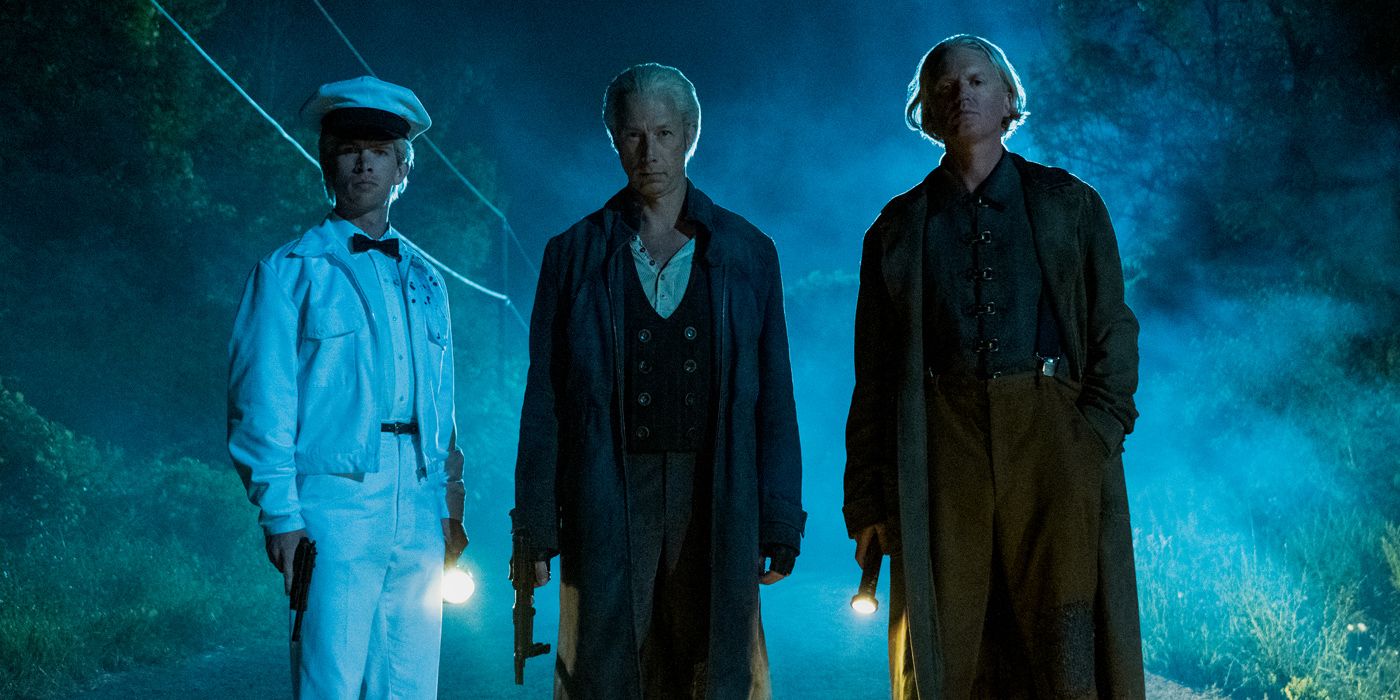
Instead we see something inhuman and ignorable, in S2E1 when these three mute, albino, nordic brothers just start shooting everything they see to get at the family. They can exist as this threat that moves things along, and be mowed down by the end, without complicating the plot further. Good job.

Except it's not as easy as that. First one of them is killed by a booby trap. And we see a brief shot of the two others giving him a viking funeral. It's sad and sweet but still weird and distant, like finding out elephants have a graveyard for their own. "Oh neat, animals do this human-like thing too." 

In the penultimate episode, they take their twist. The two Swedes attack Allison, who mind controls one into killing the other in self-defense. Watching the one choke out his only remaining human connection was shot intensely.

Later we see the last remaining Swede alone in his safe house. Not plotting yet more blood revenge against the protagonist. But looking at a childhood photo of him and his lost brothers. Remembering his forced fratricide. Staring at his hand. And raising an axe to chop it off. He is filled with so much pain and loathing over what he did when under mind control that he is going to chop his own hand off!

This did not take a lot of screen time, and in fact it all had zero dialogue. But this silent arc took them from faceless threats to something with human pain and loss. We can still see the love in the inhuman, much like in "I Am Legend."

Because of this development, he earns the final resolution where instead of killing or being killed by the Umbrella Academy, they can understand each other to say "Enough," and stop the revenge.

***

On a very minor note, I had to laugh at one small joke.

It's a rule of this blog that whenever a media work makes reference to some work of art or otherwise plot-insignificant work, what they choose to reference is a direct window into the themes the auteur is addressing. Again, see I Am Legend (or how I criticized Parasite for failing this.)

Our-Five tells his past-self they made a typo in their calculations for traveling through time. What was the typo? A decimal point misplacement.

"Instead of 5.7, it was 0.57"

Instead of Five being separated from the Seven, Five is on the side of the Seven.

Small touch, but nice.

Monday, June 29, 2020

1917: The Game: The Movie

1917 (2019) Film Poster.jpeg


1917 is very very weird. Not because it is a movie about the horrors of war. I respect that theme, but we have many of those, and 1917 certainly is not the best of them. Depicting both the scale of the carnage of World Wars and the personal level of each individual atrocity are often diametric goals, and 1917 doesn't break new ground at either of those ends. It's good if you just want *more* of that, but not unique.

What makes it unique is, well... it's not a movie.

There is a certain type of videogame that's become increasingly popular, that never provides a gap in the story flow. Cinematics are all done with the game engine. You don't end one level with a boss and portal or helicopter and then start a new one in a different zone with a "Welcome to Green Hills Zone 1" sign, but rather you continuously flow from one room to the next with smooth transitions, so that it all feels like one uninterrupted ride on a lazy river. Black Ops, Brothers, Journey, Inside are all examples. (Yes these sometimes have loading screens, but you are meant to feel that your character did not skip over anything. Open World games could be like this, but it's single player games that can manage the linear on-rails aspect of this story.) They're also slightly surreal, as you see a world change radically and develop in your 120 minute session of sitting in front of the screen with no time skips.

These stories make somewhat more sense for the videogame format, as after all you are inhabiting one person and so just sticking with their point of view is more "realistic." It doesn't feel real to play, just because that's not how we are used to stories by this point, but it does feel hypnotically surreal and is kind of its own genre at this point.

1917 is just one of those games. There's not interactivity, but the story flows much, much more like Black Ops or Inside than any other movie. There's an obvious comparison to classics like Before Sunset which also do the "one continuous take on two characters" type of story, but for those the dialogue and the relationship between the characters is the focus. Whereas for 1917, and the videogames, the *environment* is the focus. We're using this third-person-limited view to explore several epic scene-pieces, and the awe as you slowly come upon them.

1917 does this very, very well. To use the word "beautiful" is an understatement. It's like if the grandest fantasy saga videogame that is drunk on using its new level of graphics to depict every tree and broad horizon, was advanced thirty years. That's what this movie looks like: the storymode of a videogame from thirty years in the future, showing you the beauty and horror of a countryside in the middle of war.

(The plot doesn't help either. Since it wants to talk about a global scale war, but also how one soldier on one mission can make a difference. And you have colorful NPC's who pop up for three minutes to advance your quests, say a couple memorable lines, and then never appear again.)

You should absolutely watch it for the aesthetic experience (on as large a screen as you can manage.) You should also play Journey, for pretty much the same reasons. Those two experiences will be much more similar than comparing it to any other movie.