Saturday, July 6, 2019

Spider-Man: Far From Home

A quick rundown, spoiler heavy.

Image result for mysterio

The opening segment of saccharin In Memoria for the heroes who died in Endgame was the funniest thing in any MCU movie so far. That was just great.

The "blip" (where half the population died for 5 years then came back) as a metaphor for puberty ("that guy who was a dweeb just overnight became this tall hunk all the girls like and I'm still the same me") and for life passing you by (Nick Fury's pathos) were better metaphorical uses for that whole 5 year snap than the previous films had done.

The painful high school movie awkwardness was not bad... so much as an accurate recreation of a movie genre that died in the 90's. And it was a good reminder of why we don't watch those movies anymore. I can't criticize but I don't want more of it.

Parker's desire to live a life without responsibility was really undersold and tied back. If the filmmakers had wanted to sell this "you don't own me" is a pretty easy and powerful message in this day and age, hell Captain Marvel just did it. Instead they focused on his whininess, which was a concrete decision to make us sympathize with him less.

Mysterio slamming the entire MCU and genre of superhero-CGI movies with his scheme and "who buys this bullshit" schpiel was uh, pretty devastating from within the franchise. The message wasn't literally "people will believe anything" (as they say) but "people will believe this specific cheesy, saccharin set up we hired a screenwriter for" as an indictment of how bad the writing in superhero movies is.

Both of the Spider-Man MCU movies so far have been about "who is the heir of Tony Stark?" and specifically pitted him against employees or workers who rely on Stark. It's easy plot fodder for compelling B-list villains, and "the innocent young chosen heir vs the cynical servants who think they should be ruling" is a tale as old as fairy tales. However monarchism is also as old as fairy tales, and in the modern context, all these schlubs being the punching bag sounds pretty classist and anti-worker.

Now the most important point: the Reality Stone.

A major theme of this movie was special effects, illusion, and the warping of reality. We have Mysterio's shenanigans and holographic projectors. But we just as strongly have EDITH and this AR (Augmented Reality) system with an AI and attack drones and being able to read what is on everyone's smartphone, which itself is a key into what they are thinking. (Tertiarily, we have Nick Fury able to change where this high school trip is going on a whim, controlling the reality of the poor teachers.) This entire movie emphasizes the fluid nature of reality, as a series of illusions and invasions controlled by the whims of capital. Which is fine subject matter for a movie but...

As I wrote before about Ant-Man:

…the Infinity Stones themselves - aka the Captain Planet elemental harmony of this universe - are just criminally under-explored. Like yes we have two good scenes about the Soul Stone, but all six of them should be doing something different and interesting and powerful, that makes their combination more interesting than “you have collected 5 out of 6 Macguffins.” What is wielding the Mind Stone like? How does using the Space Stone change you? What is the Reality Stone even doing? (Granted Doc Strange did discuss the Time Stone some, but let’s just admit that was bad even if explored.) This would be whinily asking for a fictional universe to reveal more of its wikipedia to you except that each stone got at least a whole movie about it. They spent a movie on each stone before uniting them, and we still know barely anything about them other than “with our powers combined.” Criminal. 

So I just watched “Antman & Wasp” and, well, you know the Space Stone? 
AKA the Tesseract? There are at least 3 movies centering on the Tesseract (Captain America 1, Avengers 1, Captain Marvel, am I missing any?) and they do nothing interesting with it qua the “Space” Stone in those. It’s used to open a large portal in Avengers which is space like, but otherwise it’s just this mystical object which grants a lot of power or knowledge in vague and undefined ways. 
Well what better can we expect from Marvel except they actually made the perfect movie for the Space Stone. They could have injected it as the plot element into Antman that gives him his powers, and so all the weird growing smaller and larger pyrotechnic displays would have match up thematically perfect. It would have been a really cool demonstration that this is what existence is like when space bends to your whim, and the different meanings and perception that gives you to distance and comparison. 
Compare that with Captain Marvel, who is supposedly powered by the a byproduct of pollution from experiments with the Tesseract. Are her blasty powers anything space like?
The "Reality Stone" got a whole movie about it, Thor Dark World, where the stone just makes red blob stuff, and one scene in Infinity War where Thanos uses it to create a false reality to fool his daughter.

If they had made *this* movie about the Reality Stone instead, where both Beck's tricks and EDITH relied on its world-altering properties, we would have appreciated the power of it more, and what sort of god acquiring it (and combining it with time and space stones) would make you.

So my BamBamCanon of the MCU movies would be:

Ant-Man and Wasp [Space Stone]
Dr. Strange [Time Stone]
Far From Home [Reality Stone]
Captain Marvel [Power Stone]
Some movie where the hero unlocks the other 90% of his brain [Mind Stone]
Infinity War [Soul Stone]


Wednesday, May 22, 2019

Game of Thrones: In Stops and Starts

Image result for kings landing
Everything is fine.


So many people have weighed in with their thoughts on the last season of Game of Thrones that even my favorite existentialist Slavoj Zizek has a column on it. Naturally, his contribution to this genre is one of the best in it, while being one of the shallowest things he has written.

It is true that, in the series’ swift denouement, a strange logic takes over, a logic that does not violate credible psychology but rather the narrative presuppositions of a TV series. In the last season, it is simply the preparation for a battle, mourning and destruction after the battle, and of the battler itself in all its meaninglessness – much more realistic for me than the usual gothic melodramatic plots. 
Season eight stages three consecutive struggles. The first one is between humanity and its inhuman “Others” (the Night Army from the North led by the Night King); between the two main groups of humans (the evil Lannisters and the coalition against them led by Daenerys and Starks); and the inner conflict between Daenerys and the Starks. 
This is why the battles in season eight follow a logical path from an external opposition to the inner split: the defeat of the inhuman Night Army, the defeat of Lannisters and the destruction of King’s Landing; the last struggle between the Starks and Daenerys – ultimately between traditional “good” nobility (Starks) faithfully protecting their subjects from bad tyrants, and Daenerys as a new type of a strong leader, a kind of progressive bonapartist acting on behalf of the underprivileged.
...
But – let’s bite our sour apple now – what about Daenerys’ murderous outbursts? Can the ruthless killing of the thousands of ordinary people in King’s Landing really be justified as a necessary step to universal freedom? At this point, we should remember that the scenario was written by two men. 
Daenerys as the Mad Queen is strictly a male fantasy, so the critics were right when they pointed out that her descent into madness was psychologically not justified. The view of Daenerys with mad-furious expression flying on a dragon and burning houses and people expresses patriarchal ideology with its fear of a strong political woman.
He captures the stakes - and the psychoanalytic arc - well, but retreats to the same inanity every other left-wing provocateur/critic of the show has taken with regard to The Thing Dany Did: she didn't, you didn't believe what's being told by _men_ did you? Which reminds me of another Zizek quote:

“We all remember the old joke about the borrowed kettle which Freud quotes in order to render the strange logic of dreams, namely the enumeration of mutually exclusive answers to a reproach (that I returned to a friend a broken kettle):  
(1) I never borrowed a kettle from you;
(2) I returned it to you unbroken;
(3) the kettle was already broken when I got it from you.  
For Freud, such an enumeration of inconsistent arguments of course confirms per negationem what it endeavors to deny - that I returned you a broken kettle...”
The scourging of King's Landing is fast becoming a moment too Real to be approached, and so one our culture will obsess over, and over again, portraying differently each time, until it becomes an objet petit like the death of the Punisher's family or the 2016 election.

Left critics of the show therefore risk coming off like Soviet-apologists, who deny war crimes and police states as mere capitalist propaganda.

While this skepticism may sometime be useful (and dangerous!) in understanding historical accounts, it's terrible and lazy as artistic analysis. "Let's just say this bit is false and ignore it!" You could do that to anything in the work then. You're not understanding it at that point, you're just writing (negative) fan-fic. I managed to write a month log blog analyzing thirty scenes of the Star Wars Prequels with a revisionist take and still never had to resort to "this part you see didn't happen."

Sure, if something is a story within the story - particularly if it's given as exposition or just stylized - we should think more on what it sells about the teller than the events depicted. But the Burning was as real in its portrayal as everything else, and Daenerys's actions afterwards are no departure - she gives a speech in a smoking ruin and evinces no sadness or regret at the massive destruction around her.

It's still perfectly possible to do mediocre left-wing critical analysis of this turn. You can simply note that all of Game of Thrones is a fiction told by several liberal white intellectuals, who see all claimants for power as potential sinners, but the only way they can criticize a true revolutionary is by saying "well what if she went crazy and killed thousands of people for no reason?" But the war crime is no less a part of the story than Dany's womanhood itself or Cersei's many sins, so why praise one but try to ignore the other.

The solution is to actually confront the Event, and figure out from the way it was done and the context around it, how it fits into a broader interpretation of the narrative. Watch a scene and ask yourself "why did they say this? Why did this, that we might take for granted, happen?"

In particular: what are Dany's former allies all upset at her for? For killing thousands of civilians with dragonfire? Well no, in fact. She told them she was going to do this, with the fairly typical logic "my opponent is using them as a human shield, and we must stop her." Her allies could swallow this (even though this was a needless strategy: they could just wait Cersei out, who no longer had widespread support and was borrowing vast amounts of money on a ticking clock - and this was the sort of verisimilitude that the earlier books would have demonstrated.)

They were upset because she didn't stop. They had begged her to listen for surrender, and when surrender happened, she kept burning the city in the exact way she had been doing. This was the true dishonor to the protagonist/nobles.

As Tyrion said to Jon to convince him to kill Daenerys: "Does she look like a woman who's done fighting?"

We have reached the end of a decade of war, of eight years of a television phenomenon, and the good guys just want to go home. That was the source of the ennui at the Council that elected Bran; he was not a compromise candidate but an apathy candidate. And this is not at all historically unrealistic - the appetite for war diminishes as the psyche wears down, even if resources aren't also depleting.

Except Dany had just arrived. She'd been stuck in Essos for 6 seasons, and been up north for most of the time since then, and now is getting her first taste of the War of Five Kings, and she has plenty of energy to keep going. She doesn't seek a town's surrender, but it's annihilation if it threatens her. To her allies, that's just so... extra. They don't have time for that anymore, and certainly not time to "break the wheel" across the known world.

The parallel to the creative process is obvious. A show about sprawling webs of connection and inter-related reactions, where every victory led to three unexpected backlashes, and nothing was without consequence or a reason to bring on an entirely new character and perspective... was coming to an end. In some sense the narrative of this world completely rebelled against any neat ending. "But how would the Lords of the Reach react to Bronn? Wouldn't someone from Essos invade a weak and divided Westeros? Why would Jon stay North of the Wall once the Unsullied are gone?" Those are all the questions that an earlier book would ask. But in another sense, the narrative demanded an end or else it would eventually cease to be a narrative at all, just a series of chaotic events, repeating only in their meaninglessness.

Does this resonate with the culture the writer's are coming from?

The same day I saw the Zizek column I also saw this tweet explaining the Democratic primary:


Elizabeth Warren and Bernie Sanders and other Democrats are Daenerys here: they have seen the energy activated and the Democratic base by Trump, and they want to use it to continue on. They want to break the wheel of Republican intransigence and corruption, and pass a full slate of the progressive agenda (and wreak significant cultural changes too.) In the idealistic sense, they are almost certainly right.

But the actual voters are tired. They want Dany to stop. They want the biggest hit of a show ever to end somehow. They're fine with Bran as King and Biden as President, just so long as they can return their attention to something - anything - else. They'll take resigned acceptability over the unbearable tension of things continuing on, and on, with no resolution in sight.

Saturday, April 27, 2019

Avengers Endgame Pseudoliveblog


(Reactions not written as they happened, but arranged on the timeline as if they were.)

Okay this was a good start to the three hour capstone of their franchise. They kill God in the first five minutes - which is both to say the big purple guy who acted as Authority, and also any hope of using the old methods to return things to harmony. All that's left is the bleak freedom/existence of moving on in the world under your own power.

Five years later, the reemergence of Antman brings the fuel of innocence to our heroes. They've given up, but he's as angry and hopeful as they were on Day 1 of the postSnap world, and that kickstarts them into action. And the initial sheer craziness of his idea "let's invent time travel" also fits this existential theme. Let's just do whatever the fuck we want, nothing is impossible, we can fuck with the nature of the cosmos if we want to.

Unfortunately this is where the movie starts... going back on the rails, and becomes worse over time. Their solution of course is to "steal back the past." This is not just recovering those elemental stones which were destroyed, but also represented by diving back into previous movies of the franchise. The solution to our problems is retrieving the Way Things Were in Avengers 1 and Guardians to the Galaxy and Thor 2 (???)

Also a sidenote: the Infinity Stones themselves - aka the Captain Planet elemental harmony of this universe - are just criminally under-explored. Like yes we have two good scenes about the Soul Stone, but all six of them should be doing something different and interesting and powerful, that makes their combination more interesting than "you have collected 5 out of 6 Macguffins." What is wielding the Mind Stone like? How does using the Space Stone change you? What is the Reality Stone even doing? (Granted Doc Strange did discuss the Time Stone some, but let's just admit that was bad even if explored.) This would be whinily asking for a fictional universe to reveal more of its wikipedia to you except that each stone got at least a whole movie about it. They spent a movie on each stone before uniting them, and we still know barely anything about them other than "with our powers combined." Criminal.

Anyway, having begged the past to return, we also get the return of Thanos. And from there the movie goes downhill. He's not even the principled Authentic Evil of the previous movie (and the beginning of this one) who is noble to others in his insanity. No he's just an abusive asshole now, who takes grim delight in the pain of others. This Thanos does not pick his own gourds. And now we have to fight him, again. A real fight with both sides at their full power this time.

When the heroes return to the present and re-summon the dead half of humanity what we immediately see is... a Hell World. Nothing but blasted landscape and catastrophe. (This is just because of the missiles from Thanos' ship, but our perspective is so confined to this that it represents the results of their transformation.) This is the result of their hubris. (And the cavalry arriving is portrayed as portals from glowing, heavenly worlds.)

The gauntlet. They have to emphasize flabby Thor for two hours just to bypass why he couldn't use the gauntlet. He's a god, lightning incarnate, he is the obvious candidate for it (other than Vision, another sadly underused element - created to be some sort of android Messiah, and never used to fulfill that.) But this means that true power can be wielded by the Hulk - in this movie a new age New Man who has found balance between his emotional and rational halves, and so uses the gauntlet to restore Just The Way Things Were but also Not Losing Anything We've Gained Since Then.

The actual question begged of the gauntlet, of the entire franchise since Iron Man 1, is Tony Stark wielding the Infinite. This would actually confront his thirst for control in well, the way that comic books imagine these things (and he makes a much, much better villain than Thanos 2 Electric Boogaloo.)

And so we finally get a shot of Iron Man picking up the symbol of ultimate power, using it to destroy his enemies and Make Everything Right. He starts off by immediately genociding Thanos' slave army. Alright this is the corruption of power narrative I can... oh he's dying. That's just it, the end of the story. He goes out a good guy, having made the ultimate sacrifice, to kill a few thousand or million faceless aliens. Not anything actually good, but also not anything we'd care about so we can properly understand what was wrong about Stark Industries/Hydra all along.

Sidenote the second: Endgame is a chess term for the stage of a chess game where there are few remaining pieces, and so you can just brute force calculate every action, instead of having to rely on heuristics and patterns and guesses. Just two kings and two queens, etc.

I'm not one to fault the fan service superduper explosion combination of every superhero we've met over two dozen movies, but it's ironic how this overpopulation was the exact opposite of what the term means.

ADDENDUMS: Wow Karen Gillian got her payoff finally, after being very underused in her previous movies. I guess the writers just felt what the audience really wanted was lots of Nebula. It's out of nowhere, but I don't really disapprove, given that her character role is "to be the lolfail everyone kicks for not being as cool as them" (Thanos, her sister, the crew) and they just really rubbed that in, adding "her other timeline self" to the bullies that dunk on her. In some ways she is the ultimate Hufflepuff character, and I'm fine with her being the center of the capstone movie then, it's like Neville Longbottom actually becoming the main character of Book 7.

And I can think of nothing that is more MCU than taking an actually interesting scene that used music and imagery to draw people into a movie that was considered questionable - Starlord dancing by himself in the opening credits of Guardians of the Galaxy - and convinced audiences that "yeah 80's nostalgia plus alien landscapes is kinda cool and we are happy to watch even if it doesn't have Nick Fury", and returning to view that oh-so-slight-numinousness from the outside and just saying "wow he looks like an idiot." Keep being you, Marvel.

Tuesday, March 12, 2019

Get Your Captain Marvel Hottakes

From my FB chat:

Woman in Wyoming: I can’t join the Cpt Marvel reviews since I haven’t seen it yet
Me: Oh you joining the boycott?
Man in Copenhagen: Hey sometimes it’s hard to get out every month for the new Marvel movie

Which is how approaching Captain Marvel, or any other superhero / culture war movie du jour feels. So rather than give you very serious thoughtful analysis, you get two hot takes.

1. What sort of genre media gives you:
  • Protagonist is an experimental pilot and puts way too much of their thoughts and history in the context and metaphors of being a pilot.
  • Trippy memory sequences where scenes from childhood are injected with alien absurdity, and snarky manipulators of the memory giving commentary.
  • Cute, innocuous seeming animals that are dangerous monsters.
  • Wise-guy humor from aliens in exotic makeup.
  • The avatar of an unknowable alien intelligence talking to the protagonist in the image of their parental figure.
  • Alien empires conflicting in ambiguous politics but our heroes mostly think "fuck your bullshit" about the politics and prevent massacres.
  • Protagonist has the seed of immense power within them, that they only somewhat control and is growing.
  • Buddy cop comedy.
I'm saying it's basically Farscape. They might as well say Carol Danvers was shot through a wormhole as the opening credits highlight. It just has the same very surreal style as many Farscape episodes (how many episodes does Chricton wake up brainwashed thinking he is a member of an alien species?)

This is not a criticism. Farscape is great, and more of it is fun. But there's value in dropping the lens of "is this a typical Marvel movie" and wondering "what is this more like a typical example of?"

2. Gender.

Let's be honest. For all the genderwar cultural fire there has been over this movie... the main character could have been Carl Danvers, played by a dude, and like two entire lines in the movie wouldn't work. Other than those two lines (a flashback to a douchebro saying "it's called a cockpit for one reason (which would be dismissed as drunken rambling) and her best friend saying "we had to be experimental pilots because they wouldn't let women fly in combat" (which wtf that's not remotely true, experimental piloting is very risky and also male dominated -why have your sexism be completely fake)) nothing about the movie wouldn't make sense.

Sure, there's a (very undeveloped) theme of "you have to trust your emotions even when other people are saying to be logical" and "you have to believe in yourself even when other people belittle you" that will trigger anyone with highly sensitive political antennae... but honestly if you had that said about a male superhero, in a movie coming out of the 90's, no one would blink an eye. Those comments are not at all gendered unless you are expecting them to be.

And if your "breakthrough female character" can be replaced with no changes with a male, well a) that's actually good in terms of "acting egalitarianism", but b) you are not exactly rocking the world with the revolutionary political message of your movie.

Don't let cultural memes pull you into "controversies" when the substance of the fight is something as anodyne and milquetoast as this. It's an extremely gender neutral flashbang movie (that resembles most, a 90's scifi channel show.)

Don't fight over things not worth it just because "have you heard what they're saying on RottenTomatoes it's so upsetting." Watch the object in question yourself.

Tuesday, July 24, 2018

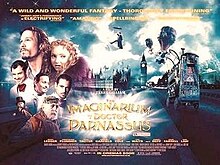
Meaningless: the Imaginarium of Doctor Parnassus

Image result for imaginarium parnassus


I finally saw this cult classic of Terry Gilliam and Heath Ledger's final half-performance. Like all my reviews, spoilers abound, so placing this below the cut.


Friday, May 4, 2018

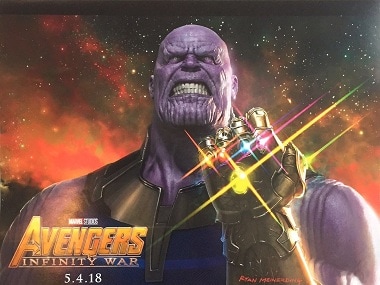
Infinity Thoughts

So Avengers Infinity War happened. I enjoyed the experience of seeing it. But there's nothing interesting to say about it because while it has workmanlike quality, it's just too incoherent.

Image result for thanos

I'll at least explain why below the spoiler cut.


Wednesday, March 28, 2018

Pacific Rim Thread

In honor of Pacific Rim 2 coming out, I've compiled the fantastic SMG responses on the SomethingAwful thread about Pacific Rim 1. It's a great discussion of fascism and nearby ideologies, Christian symbolism, mecha anime and kaiju cinema, film techniques, and fascism's root as an artistic movement.


It's also useful for interpreting Del Toro's other work, such as his Oscar Best Picture win for "Shape of Water." As SMG points out, all of GDT's movies are about "Nazis fighting monsters."

<<<Everything from this point on is by SuperMechaGodzilla and not by me.>>>