Tuesday, December 6, 2022

The Menu

There is just so much to say about "The Menu", the horror movie about avant garde dining starring Ralph Fiennes and Anna Taylor Joy. I can't even really spoiler you, because frankly most of the movie is given away in its trailer if not the premise itself.


And you should definitely go see it. But for the few reveals that you still may not know beforehand, consider this spoiler territory from here on.

Friday, November 25, 2022

Sticks the Landing


I've come to irrationally hate a certain phrase in reviews: "it sticks the landing."

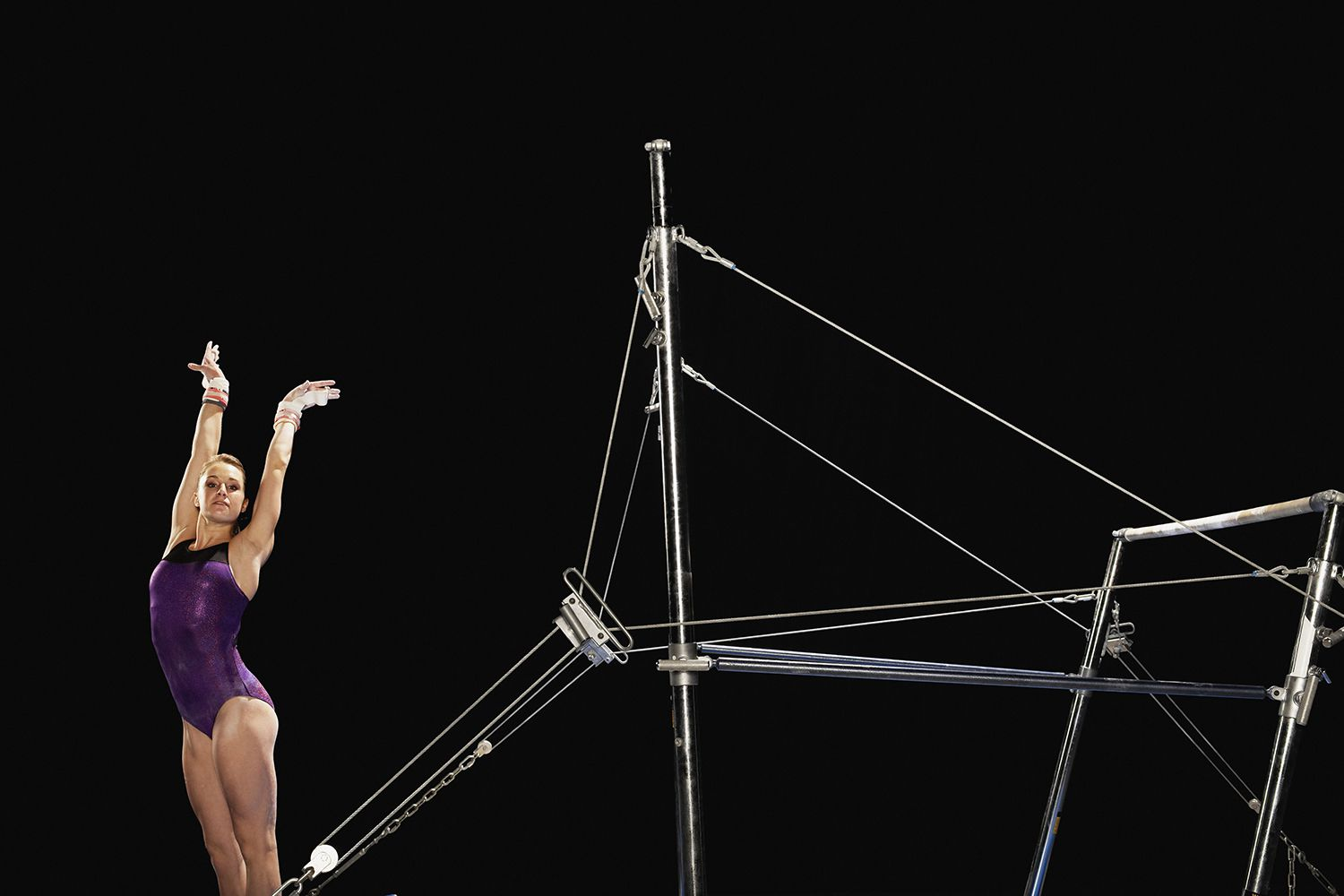
"Sticks the landing" is something said about gymnastics performances where the gymnast lands with perfect poise at the end. It refers to the many shows that FAIL in their endings. When we watch a long series (television, or franchise series) we are wondering if there will be a payoff, or it will end in disappointment: with unresolved plotlines, unearned victories, complete lack of understanding the work's themes, or just something that disagrees with our own interpretation of the series so far.

Famous recent embarrassing endings include: SW Rise of Skywalker, Game of Thrones, WandaVision, Enterprise, True Detective S1, some say the Wire or Sopranos, Seinfeld, Battlestar Galactica, and the overall fifth season of Babylon 5, Winter Soldier and Falcon. The fandoms live in dread of these ruining their last memories of the shows they love.

StL means a show has avoided that failure and is... fine. There is no sharp turn off a cliff at the 1 yard line. The villain you expected is defeated, possibly at a high cost including some lives of the main cast, the themes and mood carry through, and basically everything you expected would happen does. It can even be some of the most touching moments and best action of the entire series. It's satisfying AND reassuring.

Famous recent landings stuck include: SW Revenge of the Sith, Breaking Bad, West Wing, Farscape, Fargo seasons, Avengers Endgame, HBO Watchmen, the Expanse, Deep Space 9. I'd even say Lord of the Rings and the Wheel of Time books.

They all were fine, and for being fine, they received lavish praise because they avoided disappointment. And it's about these shows that I hear the phrase "stuck the landing."

I don't think the phrase is wrong. It seems to accurately describe endings that satisfy and don't disappoint, in a way a gymnast's final moment should. It demonstrates a minimal level of skill and awareness of your work.

I just also think that level is unambitious for what a true work of art should be trying for.

There is a third type of ending that is the key to interpreting everything that came before. These are endings that re-contextualize all of the series so far, or are vital to understanding the work. This is fairly common in scifi or fantasy where there is some Metaphysical Secret of the Universe that will be revealed, or crime/mysteries where you find out whodunnit at the end, though it's not universal in either genre. It can just be the revelation of the psychological dynamics of a character that shows this was always going to end as a tragedy, or even just enough emotional pathos that you realize the point was the character's journey and not plot. They can sometimes be confusing to the audience, who expected a neat conclusion and didn't get it.

Recent key ending examples include: SW Return of the Jedi (and redeeming Anakin), the OA (both seasons), Utena, Evangelion, Arcane, Twin Peaks, Star Trek TNG maybe, the Boys S1, For All Mankind S3, the Leftovers, A Place Further than the Universe, Outer Range, the Sandman and Watchmen comics, Station Eleven, all the good Mike Flanagan stuff.

The ideal case is, once you've seen a key ending, you immediately want to rewatch the entire series to see all its scenes again now knowing the proper context.

And while the line between "embarrassing and StL endings" may be fuzzy, and the line between "StL and key endings" is also gray... you probably have noticed whether an ending ends up in "embarrassing or key" can be a hard question. Sopranos and Seinfeld were certainly trying to make a re-contextualizing "statement" about the whole of the show in their final episode... but largely just ended up annoying people.

I highly value a good key ending. It's "informationally dense" telling me major things I didn't already know. And it requires intricate buildup in all of the episodes before for the payoff to "make sense." 

By contrast... StL episodes bore me. If I like your characters and moods I'll probably be fine watching, but I don't actually have to "find out" that they defeat the villain and maybe a main character dies. Lately, I've even stopped watching the final parts of a series because I just don't care. I'll stick around to find out a big revelation but "they did in fact save the day, but at a price" isn't it.

There's a lack of ambition to sticking the landing. It's about serving a product. A key ending would be if the gymnast revealed they were upside down the whole time and bungieing from the ceiling.

And Or

In case you were wondering what the "premiere Star Wars Blog of 2014" thought before making your decision, yeah, you should watch Andor. I think most of you know about it already, and hear it was good. If you haven't watched it, go do that thing. It's worth subscribing to Disney+ for a month. The rest of this post is analysis and highlights assuming you've seen it.

Oh, also a 1970's intro sequence for the show.


Sunday, September 11, 2022

The Founder (hint: it's class)

  "The Founder" is possibly the movie most about America I have ever seen.


For one, it's about the creation and rise of McDonald's, which is arguably the "most American" institution this country has given the world. Michael Keaton's Ray Kroc even gives a speech saying that the golden arches should rise to join the church steeple cross and the city hall tower as the iconic spires of American towns. (It's also a movie that mostly takes place in suburbs, highways, and small towns - neither big city downtowns nor rural landscapes feature much in the movie.)

But this "biographical drama" is much more layered than that. It's full of ambiguities and nuances that hit closer to our history than cynical speeches.

The movie follows Ray Kroc, and it shows him as a desperate failure, trying to convince drive-in restaurants to embrace automation, and failing badly. We have sympathy for him (especially as we see how long he has to wait for his food when he does order.) But he's not Willie Lowman who has to do this because otherwise his family will starve - we see he has enough money for a comfortable lifestyle already. He's just too ambitious, he wants more and isn't ashamed that he'll never be satisfied with simply any finite ceiling.

We then meet the hapless McDonald's brothers, who have turned their San Bernadino restaurant into a wonder of efficiency. The idea of 15 cent burgers given to you hot and fresh 30 seconds after you ordered them is portrayed as a miracle.

... one view over the course of the film is to see this restaurant design as genius gee-whiz inventiveness, while Kroc's future mass-production franchising of the design as soul-killing mechanization. But they're both part and parcel of the same arrow - the McDonalds turned food into the "legible" nightmare of "Seeing Like a State", and Kroc brought it to its ultimate fruition. The McDonalds were already, even if only in one restaurant, making chefs into employees who do nothing but flip burgers and serving only 3 menu items because that's what 85% of people order anyway, and killing any variety because that would introduce inefficiency.

One of the all-American points that the characters bring up here, is that drive-thru dine-ins had adult employees serving teenagers who loitered around, and how distasteful that was to them. Whereas the fast-food innovation returns us to the "proper" hierarchy of teenagers serving adults.

At the other end of the movie, there's a nice bit of ethnic-cultural commentary too. One of the original brothers asks Kroc why he didn't just copy the idea and mass produce it without them. And Ray going on an elegiac tear about how "McDonalds" is such a wholesome, all-American name whereas who would want to eat at a place called "Kroc's"?

Keaton is fascinating as the uber-ambitious, class-ambivalent, charming-like-a-wolf Ray Kroc. He is early on drawn to the world of the rich because they can buy his franchises and finance his restaurant. But his pure drive for efficient food production is so incorruptible that he turns on his rich golf friends because they sell fried chicken and biscuits at their restaurants, and do not personally sweep up the trash in front of restaurants when it gets out of hand (which Kroc does.) The best scene in the movie is him angrily yelling on the golf course about a badly done burger (in his hand.) We love his demonic singular drive then.

But the point is that the idle rich can not grow American's dream. Ray then goes looking for the rising middle class, to find men-and-wives with ambition to run a restaurant to the exact specifications he demands. He goes to VFW halls (this is in the 50's, when the age there is much younger) instead of country clubs. He hires Jewish Bible salesmen because they must be really driven. He's all about breaking traditional barriers to exalt the virtues of the middle class - conformity, hard-working, cleanliness. (And at the same time he falls out of love with his socialite wife, for a woman who has as much mercenary passion for business and mass production as him.)

But the things that we love him for, become the things that we hate him for in the second half. The initial inspiration for the McDonalds design, and the iron clad contract guaranteeing no deviation from that design, hold him back as the world presents new ideas for how to make restaurants even faster, more efficient, and cheaper. But the perfectionism of the original owners denies the changes he wants.

So Ray graduates to legal and financial chicanery, to steal the business out from under the hapless original founders. It is, indeed, very American that way. And we wouldn't even fault Ray for wanting to launch his brand independent of them, except for him being so egotistical that he can't just buy them off, he has to claim every idea of theirs as his own. He steals their name, he declares himself the Founder and his first franchised copy as "restaurant number one", and drives them out of business by setting up a McD's across the street from them. Can't have a real story of America without a Big Steal.

Monday, August 15, 2022

Enter Sandman


Long and short of it:

If you've read the comics, skip the series as it's a bad adaptation that adds very little.

If you haven't read the comics, this is probably the best television all year because you've never seen writing like this. Watch it.

Spoilers and many thoughts below the cut:

Thursday, July 28, 2022

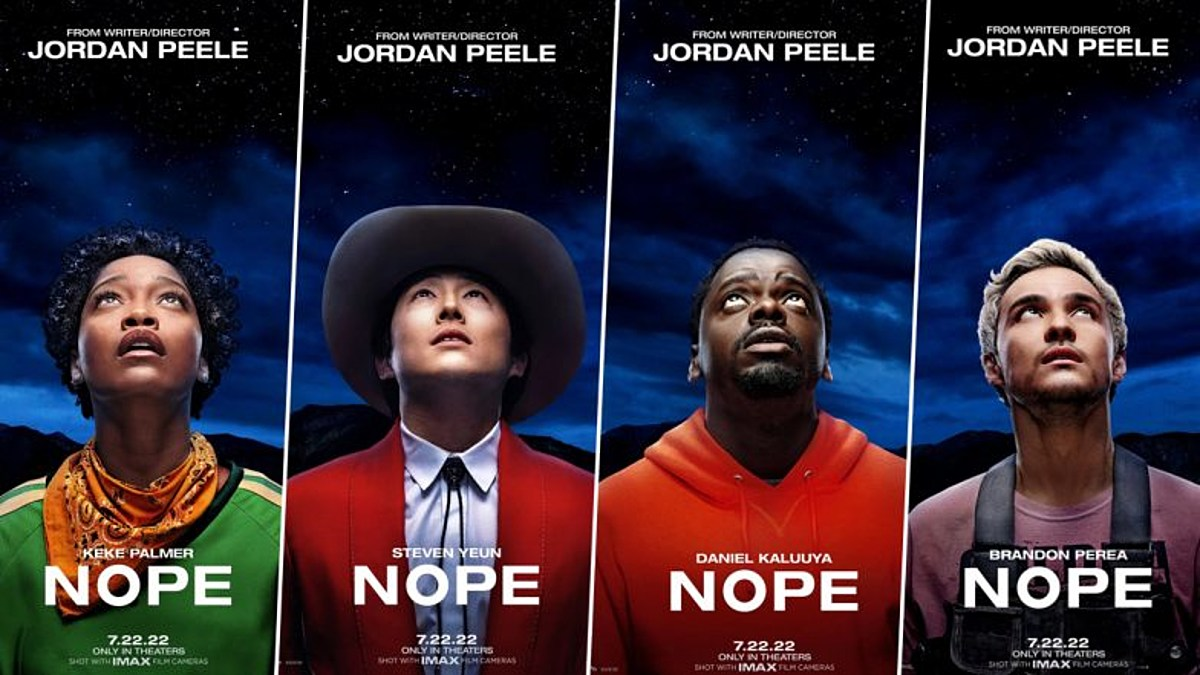
NOPE

Just got out of Jordan Peele's NOPE and am jotting down this quick review. Before I get to any spoilers, let me say: yes it's good and you should watch it. You should especially watch it in the theaters because it is full of beautiful, eerie shots that deserve your total immersion. My one regret (in all of life) is that I did not watch it on IMAX. See an IMAX version of this if you possibly can.


Since the plot of the movie is so swaddled in mystery, basically any further discussion of it is spoilers (beyond, there's obviously UFO imagery.) So, caveat emptor for reading beyond this line:

Friday, July 1, 2022

The Stageplay to Anime Spectrum

 [Note: I feel there should already be a term for this and pre-existing writing on this spectrum. But I can't find it, so I am inventing the concepts straight from the dome. If you can point me towards where this is already talked about, I'd appreciate that.]

Reading a review of Amazon's "Outer Range" I was struck by this quote: https://twiststreet.tumblr.com/post/683478412345720832

I think the thing I like about this Outer Range show is how much you can tell the writers come from writing plays.  All the dialogue– you can just hear it in the dialogue, that there are playwrights in the mix on the show.  It’s the kind of thing you don’t even have to be told– it would not be a hard guess.  I feel like that’s the appeal of the show for me more than the more grab-y outlandish fantasy elements that probably got the show sold: I just want to hear Will Patton talk about his love of hentai, or for James Brolin to explain the origin of the universe in 30 seconds, or whatever else.  Show’s got a voice going…

Emphasis mine. Sadly I can't find the aforementioned speech of Wayne Patton describing the naked ladies he puts on his walls, but it's in Episode 2 and pretty great.

And that made me thinking about difficulty I have been having watching anime lately. 

Anime obviously has dialogue. But very frequently the dialogue is a minimalist point, used to serve contrast to the visuals. We may get a shout of reaction, or one word said over a landscape of quiet melancholy, or one sinister statement emphasizing the pure evil of the villain. Very often we get a "jumps onto the scene" line showing just how badass or determined a character is. An absurdly high percentage of anime dialogue is someone calling out another character's name, and nothing else, and how much of anime (and Hideo Kojima) "interrobang echolalia" - repeating back the last two words of what someone said but with an exclamation and confusion?

Much less often do we get beautifully written monologues or flowing dialogues of a writer showing off both their erudition and the ability of the actor to express these words. If there is a heartfelt monologue in a show like this, it's a voiceover as we watch scenes of others play out visually.

This isn't a matter of translation, since 1. not all anime is like this, 2. fluent speakers would be quick to point out the difference, and 3. American comics are like this too. Some comics have epic monologues of course, but the page design for them is always a little bit awkward... a close in of their face as half the page is filled up with text. No, for comics we much prefer rather than Ozymandias's long monologues, just his moment of saying "I did it 35 minutes ago" as he poses like a ruler over a throne room. It's pointed.

I'm not even talking about all anime, or anime adjacent products, or animated series. Arcane and Avatar the Last Airbender love showing off lengthy dialogue and the performance of the character delivering it. Think of Jinx's tea party or Zuko imitating Iroh.

It's just there is a set of visual media that is not "writerly" when it comes to dialogue. It uses minimalism, repetition, and contrast to create a "mood" for the visuals which are the real emphasis of the work. This includes most anime, many action movies, and a whole lot of avant-garde European cinema. One would even say mega-artist David Lynch falls into this brand. This takes skill and craftstmanship to do well, and many people really like it.

Look at any youtube video of "top 20 best anime scenes" and tell me what they have in common.

On the other end, you have actors who wish they were in a Shakespeare play and writers who wish they were Shakespeare, giving you scenes that are shared as paragraph long quotes or three minute youtube videos. Babylon 5, Outer Range, the OA, Deep Space Nine, and dear god Fargo or anything made by the Coen brothers.

Someone said to call this end "writerly", but there isn't a good definition of that (other than "like a writer") and I am calling as much attention to the delivery by the actor as to the actual text.

It's impossible to say either of these is "better" than the other, since there's a very wide range of quality within each. Spirited Away (anime) is hella better than Season 4 BSG (stageplay), while Knives Out (stageplay) blows out of the water something like Rise of Skywalker (anime.) There's no reason to even advocate a "happy middle" between the ends, since their audiences specifically love the style that show is best representing and want more of it.

It is possible to say what our preference is, and a large part of my recent journey has been realizing how much I prefer the stageplay end of the spectrum.